

What Negotiation Actually Looks Like in the Willamette Valley Right Now
Is it a buyer's market or a seller's market in the Willamette Valley right now? It depends on the city, the price point, and how long a home has been listed — there isn't one answer for the whole region. Here's what actually determines your negotiating room, whether you're buying or selling.
We get some version of this question almost every week, usually from two different directions. A seller wants to know if they can hold firm on price. A buyer wants to know if they can ask for a break. Both are really asking the same thing: who has the leverage right now?
The honest answer is that it depends — and not in a vague, dodge-the-question way. Negotiating room in the Willamette Valley right now genuinely shifts from one city to the next, one price tier to the next, sometimes one listing to the next. A home in Canby that's priced right and shows well may still generate multiple offers. A similar home in Woodburn that's sat for six weeks might have real room to negotiate. Neither of those facts tells you much about the other.
That's the piece most national headlines miss, and it's the piece we think actually matters if you're trying to make a decision this summer.
Why "Is It a Buyer's or Seller's Market?" Is the Wrong Question
National coverage tends to describe "the housing market" as one thing — a single dial that's either tilted toward buyers or toward sellers. Even large-scale sources like NAR's existing home sales reports and Redfin's housing market data center are built from national and metro-level averages — useful for spotting broad direction, but not built to answer what's happening on a specific street in a specific city. That framing doesn't hold up once you get local, and it holds up even less once you get hyperlocal.
Across our territory, in areas like Canby, Oregon City, Wilsonville, Woodburn, Aurora, Hubbard, and Molalla, we're seeing real variation from town to town, and even between neighborhoods within the same town. Some homes are moving quickly and closing at or near asking price. Others are sitting longer and closing with meaningful concessions. Both of those things are true in the Willamette Valley at the same time, which is exactly why a single "buyer's market" or "seller's market" label doesn't serve you well.
If you're making a decision about listing or making an offer, the city-wide label matters far less than the answer for your specific street, price range, and property type.
What We're Seeing as of Mid-July 2026
Pulling recent closed sales across our territory, a consistent pattern shows up: negotiating room is uneven, and it's tied more to price tier and time on market than to any single city as a whole.
In some price ranges and some markets, homes are still closing quickly, often at or very close to list price — these tend to be well-priced, well-presented homes in strong condition. In other price ranges and markets, a meaningful share of recent sales closed below the original asking price, sometimes with a price reduction along the way before the home ever went under contract. Days on market varies just as widely, from under two weeks in some pockets to well over a month in others.
We're being intentionally general about which markets fall where, and that's on purpose — this shifts by the month, sometimes by the week, and a specific number attached to a specific city today can be stale by the time you read this. If you want the current read for a specific city or price point, that's exactly the kind of question we're happy to answer directly, using the most current data available rather than a snapshot from when this was published.
What Actually Determines Your Negotiating Room
Regardless of which city you're watching, a handful of factors consistently explain why one home negotiates and another doesn't.
Price Tier
Entry-level and mid-range homes in good condition tend to move faster and hold price better — there's simply more buyer demand at those price points. Higher price tiers often see longer timelines and more room to negotiate, partly because the buyer pool is smaller and partly because those buyers tend to be more deliberate.
Days on Market
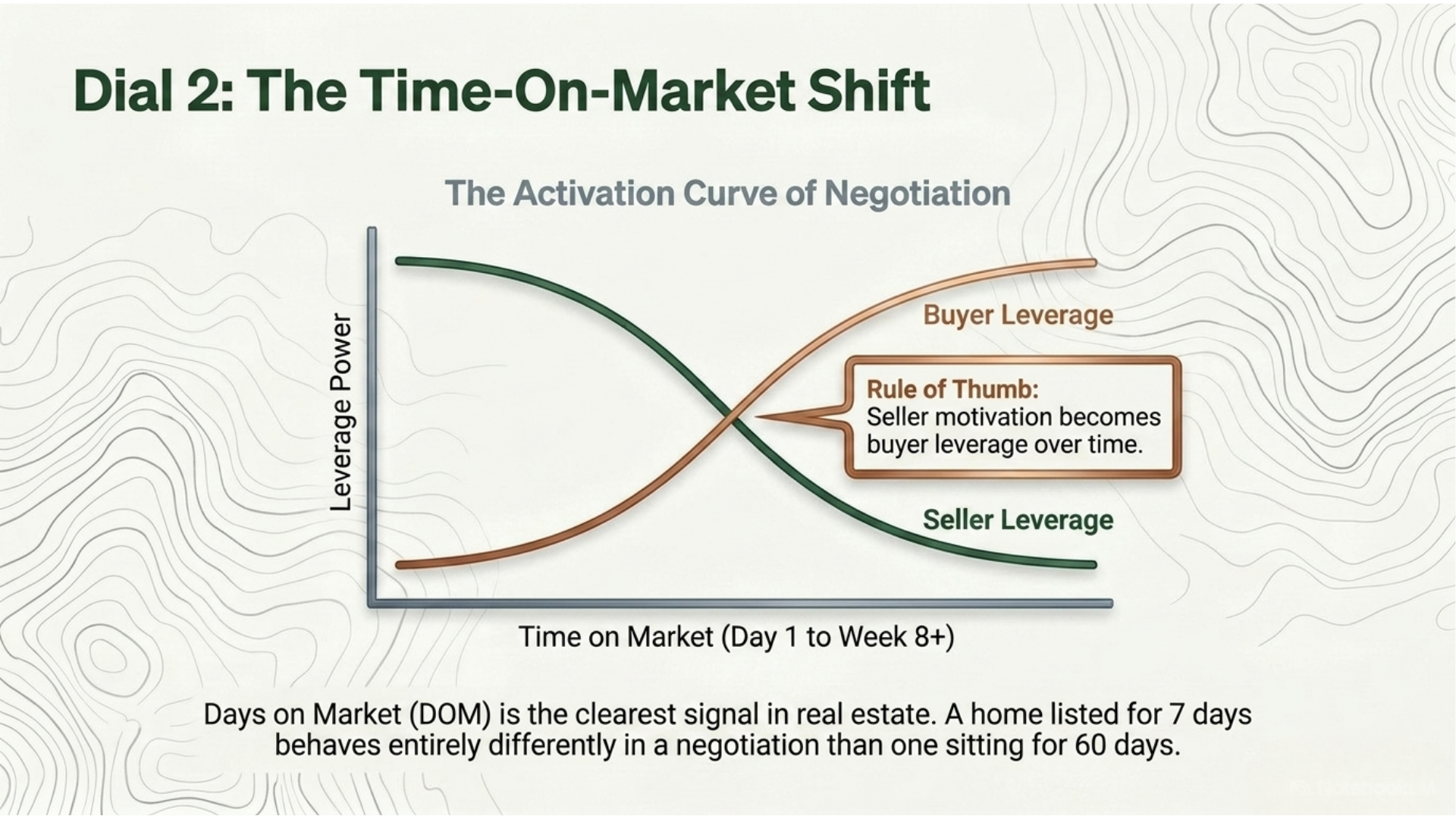
This is one of the clearest signals. A home that's been listed for a week behaves very differently in negotiation than one that's been listed for two months. The longer a home sits, the more a seller's motivation — real or perceived — starts to show up in offers.
Condition and Presentation
Homes that show well and don't raise obvious red flags during a walkthrough tend to hold their price. Homes that need visible work invite buyers to build that cost into their offer, whether or not the seller has already priced it in.
Competition From New Construction
In several of our markets, new construction is a real factor in how resale homes get negotiated. Builders sometimes offer incentives — rate buydowns, closing cost credits — that resale sellers don't always match dollar for dollar, which can shift buyer expectations for comparable homes nearby.
Mortgage Rates
Rate movement affects how motivated buyers are to negotiate versus walk away. When rates ease, buyer pools tend to widen, which can reduce a seller's need to concede. When rates hold steady or climb, buyers often push harder on price or credits to offset the higher monthly cost. Checking the current rate environment through a source like Freddie Mac's Primary Mortgage Market Survey is a useful gut check before you set expectations either way.
What This Means If You're Selling
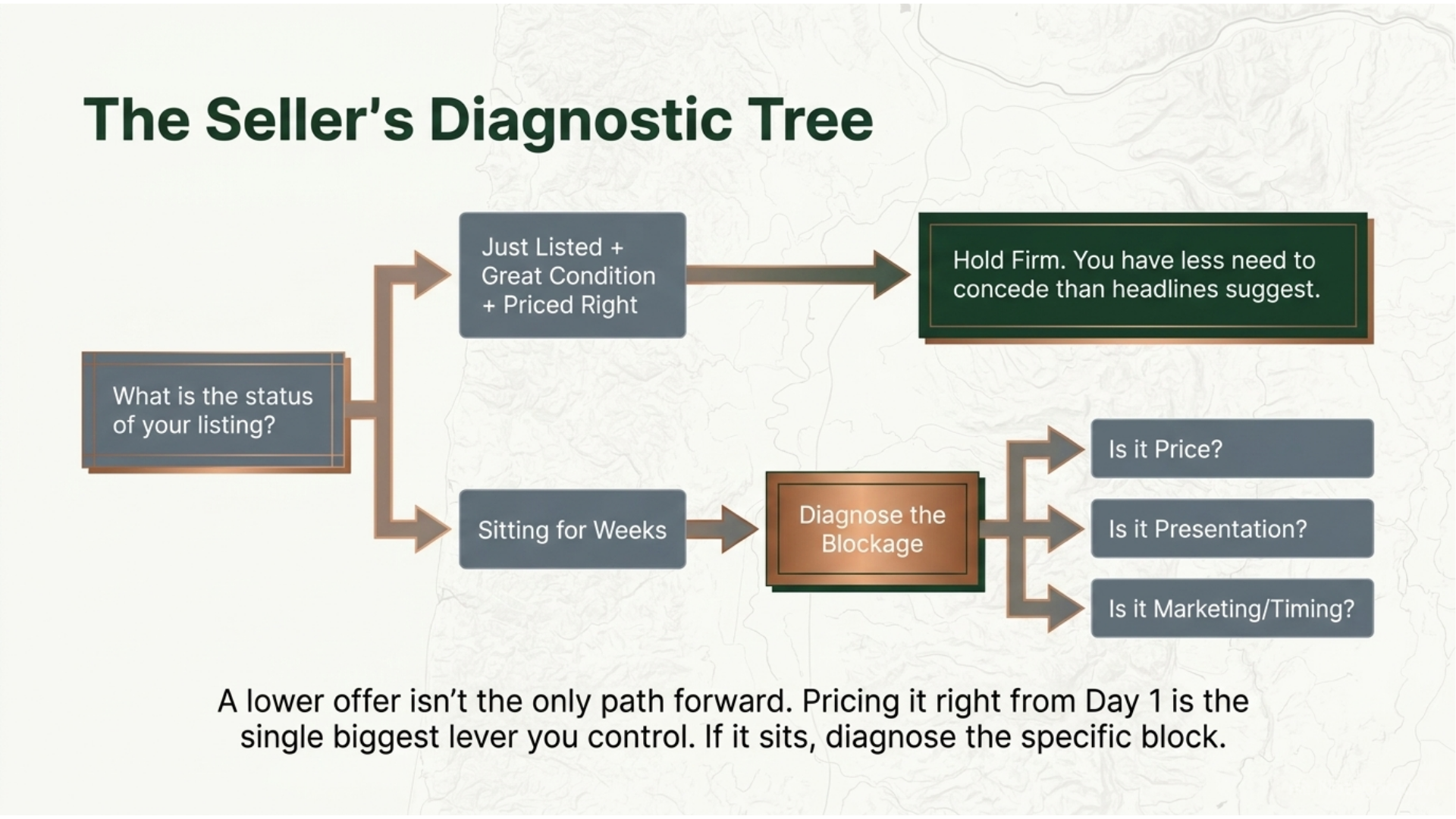
If your home checks the boxes above — priced accurately for its tier, in solid condition, freshly on the market — you may have less need to concede than the general "negotiations are back" narrative suggests. Pricing it right from day one is still the single biggest lever you control.
If your home has been sitting for a while, it's worth having an honest conversation about why, rather than assuming a lower offer is the only path forward. Sometimes it's price. Sometimes it's presentation, timing, or how the home is being marketed. Each of those has a different fix.
What This Means If You're Buying
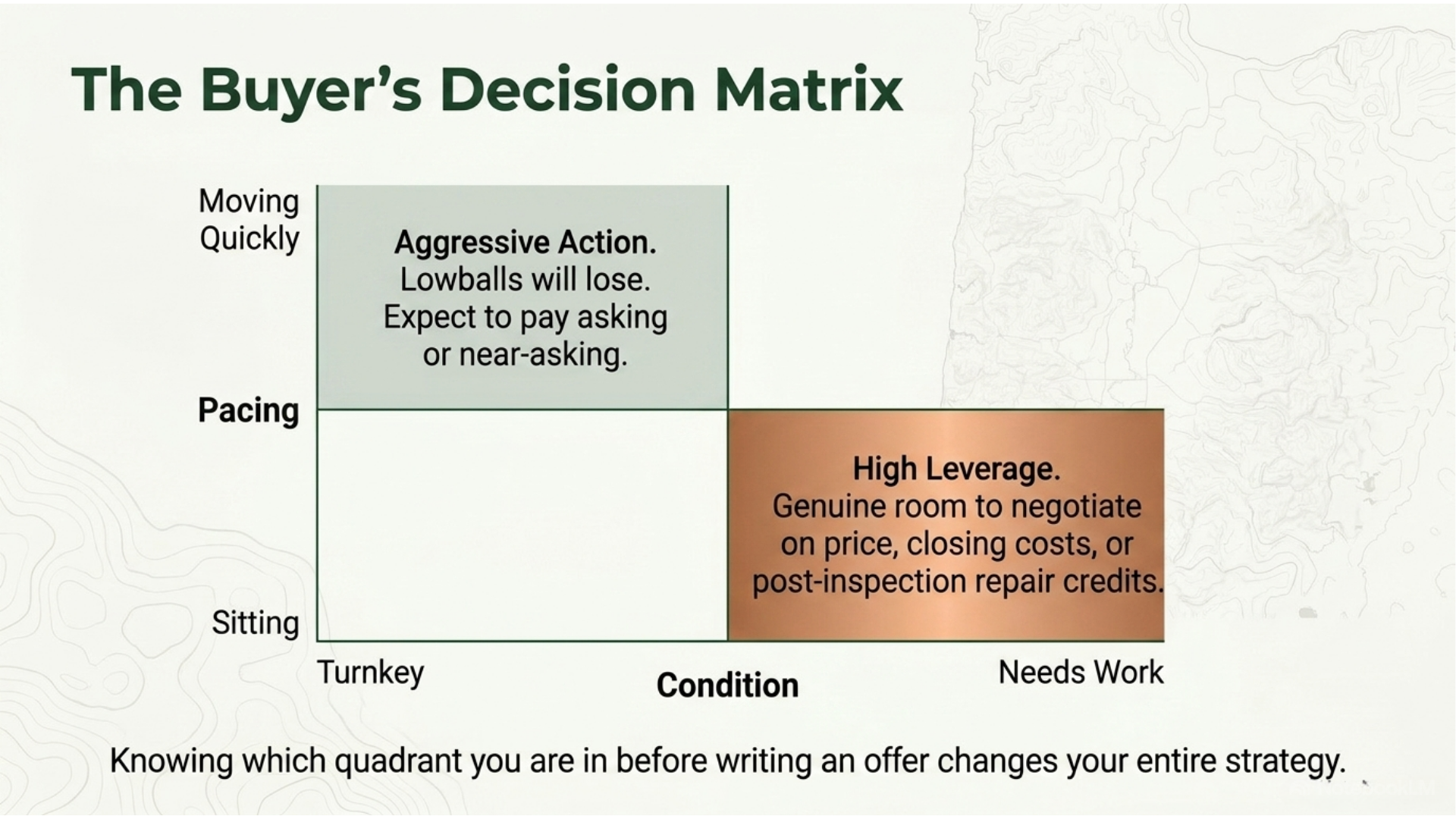
If you're looking at a home that's been on the market for a while, in a price range where inventory is sitting longer, there may be genuine room to negotiate — on price, on closing costs, or on repair credits after inspection. It's worth asking.
If you're looking at a well-priced home in a price range where things are still moving quickly, going in with an aggressive lowball offer risks losing the home to a buyer who's willing to move at or near asking. Knowing which situation you're in before you write an offer changes your entire strategy.
One specific version of this negotiation is worth knowing about ahead of time: if the appraisal comes back below the purchase price, that's its own decision point with its own options. We walked through exactly what that looks like for both buyers and sellers in Appraisal Came In Low? Here's What Buyers and Sellers Do Next.
How to Find Out Where You Actually Stand
Because this shifts by city, by price point, and by month, the most useful thing we can offer isn't a single stat — it's a current read on your specific situation. We pull local market data regularly and can tell you, in plain terms, what's happening right now for a home like yours, in the area you're watching.
If you're weighing whether to list, or wondering how firm to be on an offer, that's a conversation worth having before you decide anything.
For broader context on how pricing strategy plays into all of this, our recent guide on pricing your home right in the Willamette Valley is a good next read.
FAQ
Is it a buyer's market or a seller's market in the Willamette Valley right now?
Neither, uniformly — conditions vary significantly by city and price tier. Some segments of the market still favor sellers, while others have shifted meaningfully toward buyers.
What determines whether I have room to negotiate?
Price tier, how long the home has been on the market, its condition, and how it compares to competing listings — including new construction — all play a bigger role than the city name alone.
How often are sellers actually accepting lower offers or offering concessions right now?
It depends heavily on the specific home and market segment. Some homes are still closing at or above list price with no concessions, while others are seeing price reductions or closing cost credits. There's no single regional answer.
Reach out for a local snapshot — no pressure, just real insights.
Ruth & Frank Howard, Brokers | Your Howard Team | Equity Oregon Real Estate
Serving Canby, Oregon City, Wilsonville, Woodburn, Aurora, Hubbard, and surrounding Willamette Valley communities.
Local market knowledge across the Willamette Valley — from Canby and Oregon City to Salem, Keizer, Woodburn, Hubbard, and surrounding areas.
 All information provided is deemed reliable but is not guaranteed and should be independently verified. IDX information is provided exclusively for consumers' personal, non-commercial use, that it may not be used for any purpose other than to identify prospective properties consumers may be interested in purchasing, and that the data is deemed reliable but is not guaranteed accurate by RMLSTM.
The content relating to real estate for sale on this web site comes in part from the IDX program of the RMLSTM of Portland, Oregon. Real estate listings held by brokerage firms other than Equity Oregon Real Estate are marked with the RMLSTM logo, and detailed information about these properties includes the names of the listing brokers. Listing content is copyright © 2026 RMLSTM, Portland, Oregon.
This content last updated on September 21, 2026 1:28 PM UTC at 4 AM. Some properties which appear for sale on this web site may subsequently have sold or may no longer be available.
All information provided is deemed reliable but is not guaranteed and should be independently verified. IDX information is provided exclusively for consumers' personal, non-commercial use, that it may not be used for any purpose other than to identify prospective properties consumers may be interested in purchasing, and that the data is deemed reliable but is not guaranteed accurate by RMLSTM.
The content relating to real estate for sale on this web site comes in part from the IDX program of the RMLSTM of Portland, Oregon. Real estate listings held by brokerage firms other than Equity Oregon Real Estate are marked with the RMLSTM logo, and detailed information about these properties includes the names of the listing brokers. Listing content is copyright © 2026 RMLSTM, Portland, Oregon.
This content last updated on September 21, 2026 1:28 PM UTC at 4 AM. Some properties which appear for sale on this web site may subsequently have sold or may no longer be available.
