


What Not to Fix Before Selling Your Home (Especially If You’re Downsizing)
One of the most common things we hear from homeowners preparing to downsize is some version of: “We should fix everything before we sell.”
That impulse makes sense. Your home has mattered to you, and you want to do it right. But for many downsizers, the “fix everything” list is also one of the biggest reasons the move gets delayed. It can start to feel too costly, too time-consuming, and simply overwhelming.
Here’s the good news: most buyers aren’t looking for perfect. They’re looking for a home that feels cared for, clean, and easy to step into.
A calmer, more effective approach is to focus on what helps the home function well and present confidently—without taking on expensive projects that don’t truly change the outcome.
If you’ve been searching phrases like what not to fix before selling your home or downsizing before retirement, this guide is designed to make prep feel simpler and more manageable—especially for homeowners in Canby and across the Willamette Valley.
A simple way to decide what to do (and what to skip)
When you’re downsizing, it helps to sort every project into one of three categories:
Fix it (safety and function)
Improve it (first impressions and confidence)
Skip it (big upgrades that add stress without clear payoff)
This is where a clear plan saves you from over-investing. You don’t need to do everything. You need to do the right things.
Start with working order and first impressions (the high-value basics)
If there’s one place to put your energy, it’s this: make sure the home is in working order and doesn’t give off “neglect” signals. Here are practical, downsizer-friendly examples that are usually worth doing:
1) Stop leaks and drips
Dripping faucets and running toilets can create buyer anxiety fast. They’re small fixes that signal maintenance and care.
2) Make doors, hardware, and cabinets work smoothly
Doors that don’t latch, locks that stick, cabinet doors that don’t close, missing handles—these are simple adjustments, and buyers notice because they interact with them.
3) Fix what’s obviously broken
If something is clearly not functioning (a broken fixture, missing hardware, a non-working switch), it’s usually worth repairing so the home feels complete and cared for.
4) Invest in cleanliness
A deep professional clean is often some of the best money spent, especially for downsizers. Cleanliness builds confidence and improves the feel of the home immediately.
5) Clean the windows
Bright, clean windows help the home feel fresher and better cared for—inside and out.
6) Curb appeal cleanup
Trim and tidy landscaping, clear debris, touch up the entry, clean gutters, and consider power washing walkways or the exterior if needed. The goal isn’t perfection—it’s a home that feels maintained the moment someone arrives.
A quick note on paint: Paint is one of those “it depends” items. If a home has heavy wear on the walls or very bold colors, a fresh coat in a calm neutral can be a high-impact way to help the home feel cared for and easy to step into. If paint still looks good, it may be something to skip.
A quick note on required items that can reduce last-minute stress
Some pre-sale tasks aren’t about style—they’re about being prepared and avoiding surprises under a tight timeline.
Depending on the home, there may be items like smoke and carbon monoxide alarms (including age and placement guidelines) and water heater seismic strapping that are important to confirm ahead of time. Requirements and guidelines can change, and details vary by property, so this is where local expertise matters.
Once you’re in contract, the inspection period moves quickly. Handling these kinds of items early helps the process feel calmer—and it’s exactly the kind of thing we help our clients identify upfront.
The carpet dilemma (why “replace it” isn’t always the answer)
Flooring is one of the most common stress points for sellers. Many homeowners assume they should replace carpet before listing. But buyers often prefer not to inherit someone else’s brand-new carpet choice—and some are sensitive to odors or want to select their own flooring.
A good starting point is simple: if the carpet is in decent shape, professional cleaning can go a long way. If it’s worn, stained, or has odors, there are options—sometimes a credit or pricing strategy is a better fit than replacing it outright.
This is one of those areas where a short conversation can save a lot of unnecessary work.
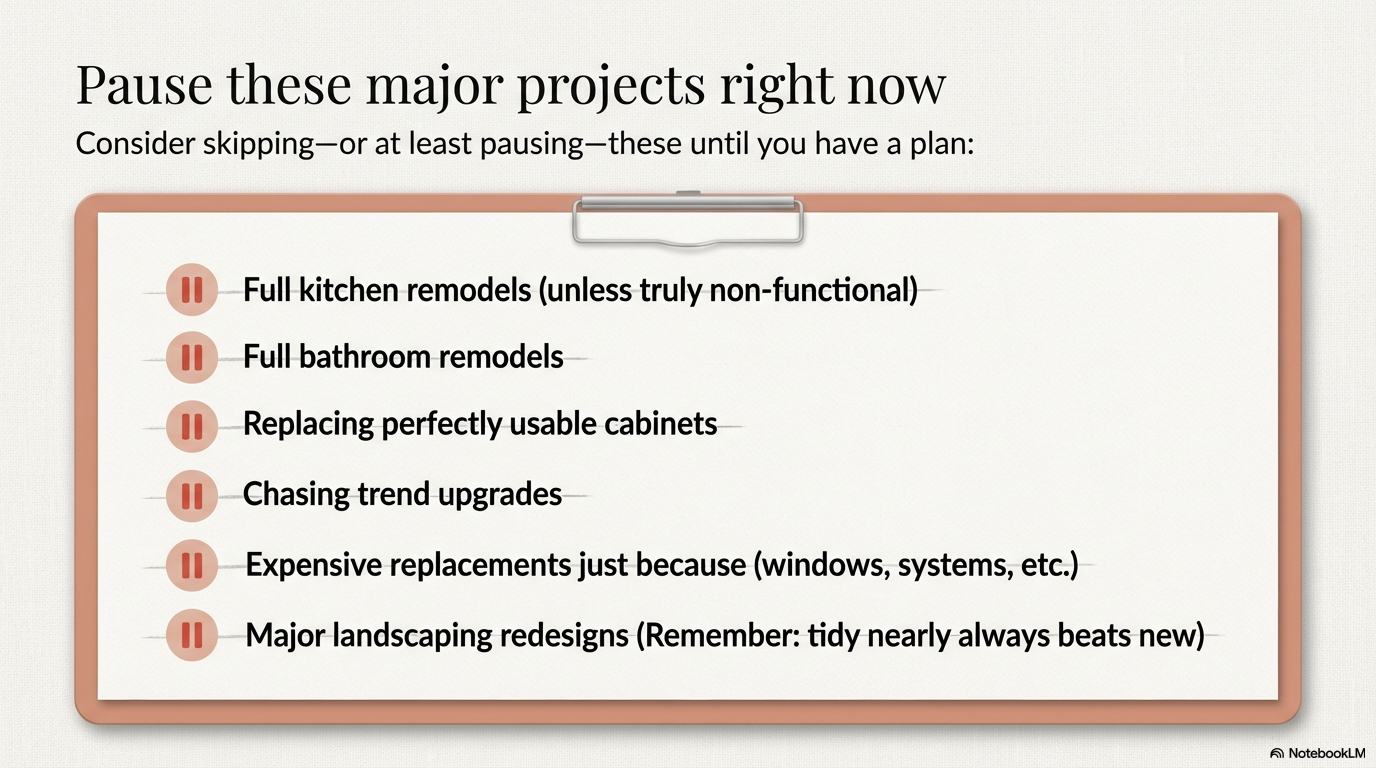
What not to fix before selling
Downsizers are often tempted to take on big upgrades “so the home will sell.” In many cases, these are the projects that create the most cost and stress with the least payoff.
Consider skipping—or at least pausing—these until you’ve talked through a plan:
- A full kitchen remodel (unless the kitchen is truly non-functional)
- A full bathroom remodel
- Replacing perfectly usable cabinets
- Chasing trend upgrades
- Major landscaping redesigns (tidy nearly always beats “new”)
- Expensive replacements “just because” (windows, systems, etc.)
This doesn’t mean you ignore real issues. It means you avoid over-improving in ways buyers may not value the way you hope.
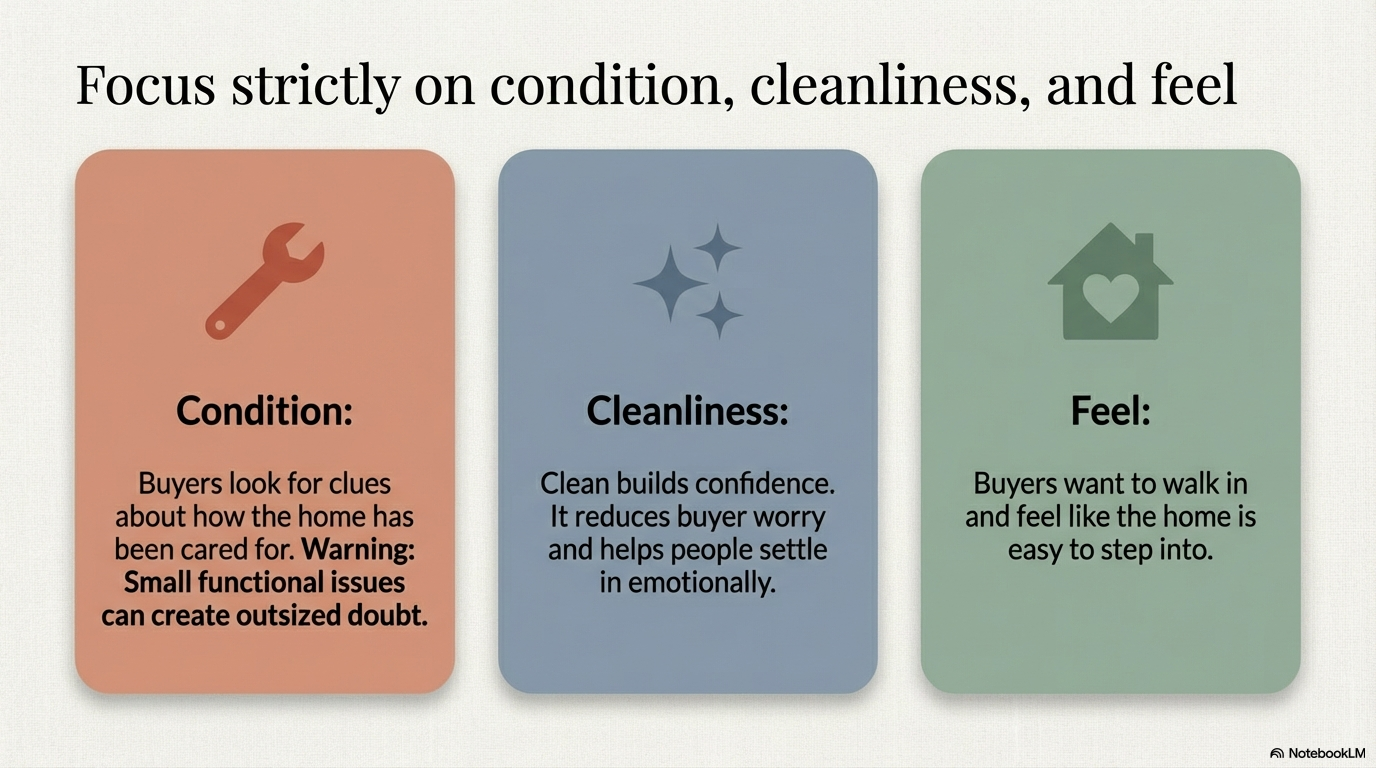
What buyers notice first: condition, cleanliness, and feel
Condition: Buyers look for clues about how the home has been cared for. Small functional issues can create outsized doubt.
Cleanliness: Clean builds confidence. It reduces buyer worry and helps people settle in emotionally.
Feel: Buyers want to walk in and feel like the home is easy to step into—not like they’re taking on a big project right away.
Most people want a home they can improve over time, not a home that immediately feels like work.
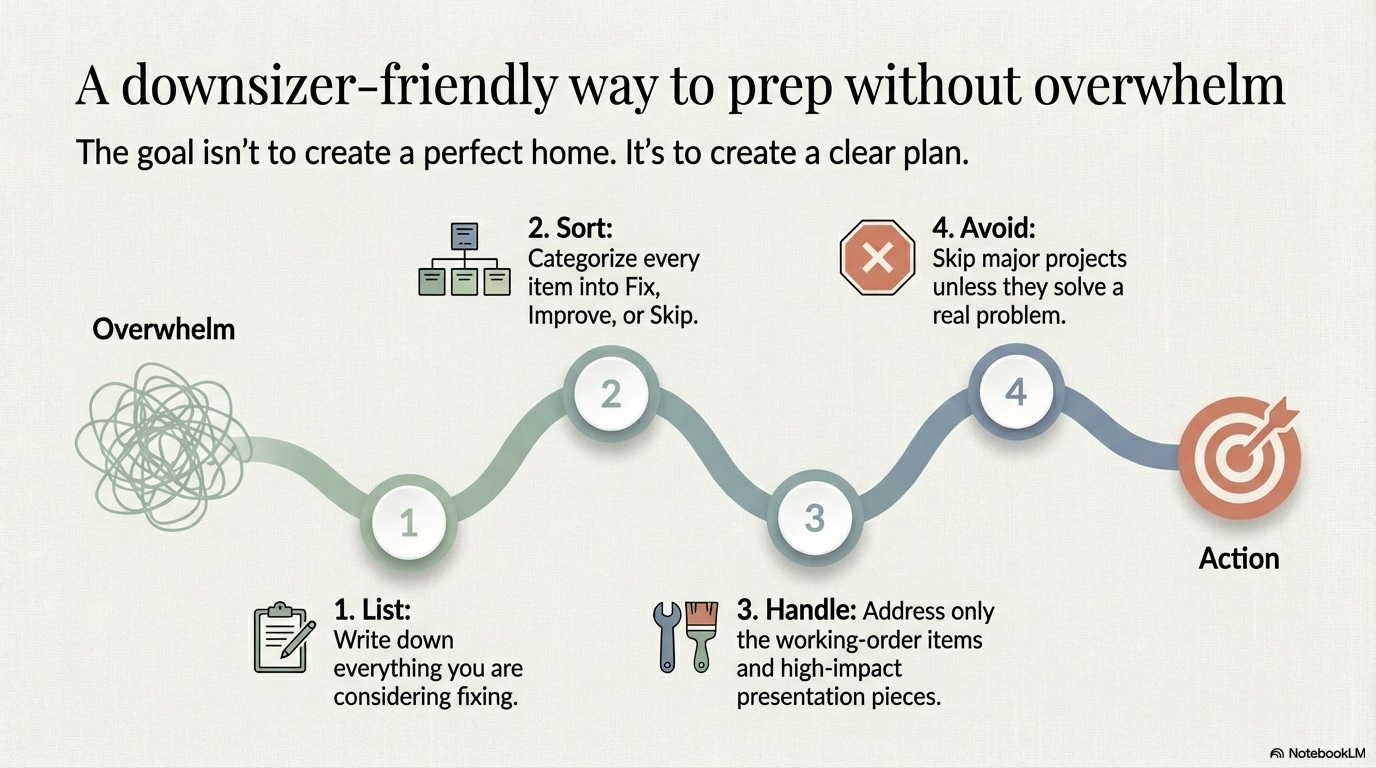
A downsizer-friendly way to prep without overwhelm
If downsizing is on your horizon—whether you're in Canby, elsewhere in the Willamette Valley, or anywhere in Oregon—the goal isn't to create a perfect home. It's to create a clear plan.
A simple approach:
- List everything you're considering
- Sort it into Fix / Improve / Skip
- Handle the working-order items and high-impact presentation pieces
- Avoid major projects unless they solve a real problem
If you'd like help creating that triage list, we're happy to walk through it with you. With a clear framework, the prep process usually feels far more manageable than people expect.
Once the repair decisions are made, the next step is presentation. Our guide to what home staging really looks like for Willamette Valley sellers walks you through exactly how we prepare a home to show at its best — room by room, from walk-through to photography.
Reach out for a local snapshot — no pressure, just real insights.
 All information provided is deemed reliable but is not guaranteed and should be independently verified. IDX information is provided exclusively for consumers' personal, non-commercial use, that it may not be used for any purpose other than to identify prospective properties consumers may be interested in purchasing, and that the data is deemed reliable but is not guaranteed accurate by RMLSTM.
The content relating to real estate for sale on this web site comes in part from the IDX program of the RMLSTM of Portland, Oregon. Real estate listings held by brokerage firms other than Equity Oregon Real Estate are marked with the RMLSTM logo, and detailed information about these properties includes the names of the listing brokers. Listing content is copyright © 2026 RMLSTM, Portland, Oregon.
This content last updated on September 21, 2026 1:28 PM UTC at 4 AM. Some properties which appear for sale on this web site may subsequently have sold or may no longer be available.
All information provided is deemed reliable but is not guaranteed and should be independently verified. IDX information is provided exclusively for consumers' personal, non-commercial use, that it may not be used for any purpose other than to identify prospective properties consumers may be interested in purchasing, and that the data is deemed reliable but is not guaranteed accurate by RMLSTM.
The content relating to real estate for sale on this web site comes in part from the IDX program of the RMLSTM of Portland, Oregon. Real estate listings held by brokerage firms other than Equity Oregon Real Estate are marked with the RMLSTM logo, and detailed information about these properties includes the names of the listing brokers. Listing content is copyright © 2026 RMLSTM, Portland, Oregon.
This content last updated on September 21, 2026 1:28 PM UTC at 4 AM. Some properties which appear for sale on this web site may subsequently have sold or may no longer be available.
